A Ferrotype Co. Device

Vesper Tesserae

A Divination App for iPhone.

Vesper Tesserae is a contemplative oracle — 56 original concepts drawn by a physical gesture, weighted by the time of day, the phase of the moon, and the pressure of the air around you.

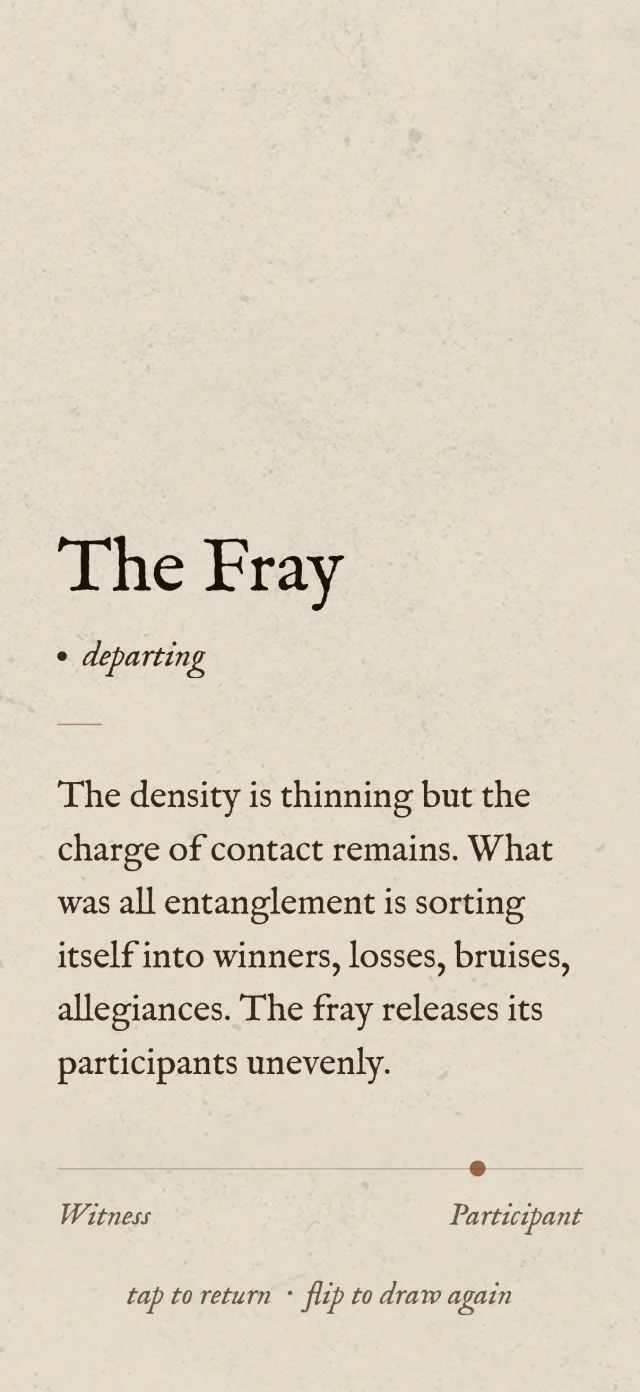
A drawn concept card in Vesper Tesserae showing a concept name, Arriving or Departing label, body text, and axis diagram

What it is

An oracle that uses the conditions of the moment — not chance — to draw what you receive.

Most divination apps shuffle a deck at random. Vesper Tesserae works differently. The draw is shaped by three environmental signals — the time of day, the current lunar phase, and local barometric pressure — combined into an algorithm that weights which concepts are near and which are distant at any given moment. The result is not random. It is responsive.

The corpus is entirely original: 56 concepts organized across 8 thematic axes, each concept holding two faces — Arriving and Departing. The face you receive depends on the same environmental weighting. Dawn tilts toward Arriving. Dusk tilts toward Departing. Between those poles, the moon and the air have their say.

There is no AI. There are no spreads, no human readers, no journaling features, no streaks, no notifications. There is a question, a gesture, and a concept waiting on the other side of the phone.

How it works

The draw is a physical act.
The phone is the instrument.

  1. i.

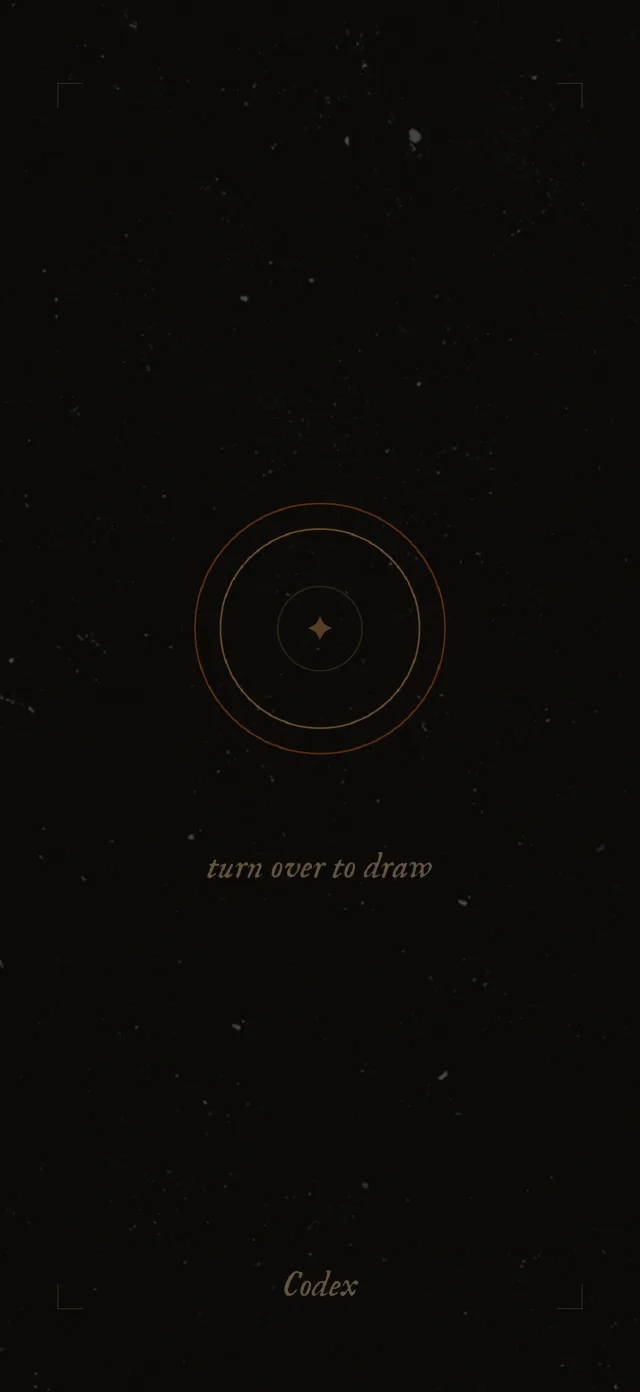
    Hold a question in mind. Open Vesper Tesserae. The waiting screen appears — two concentric rings breathing slowly, a fixed star at center.

  2. ii.

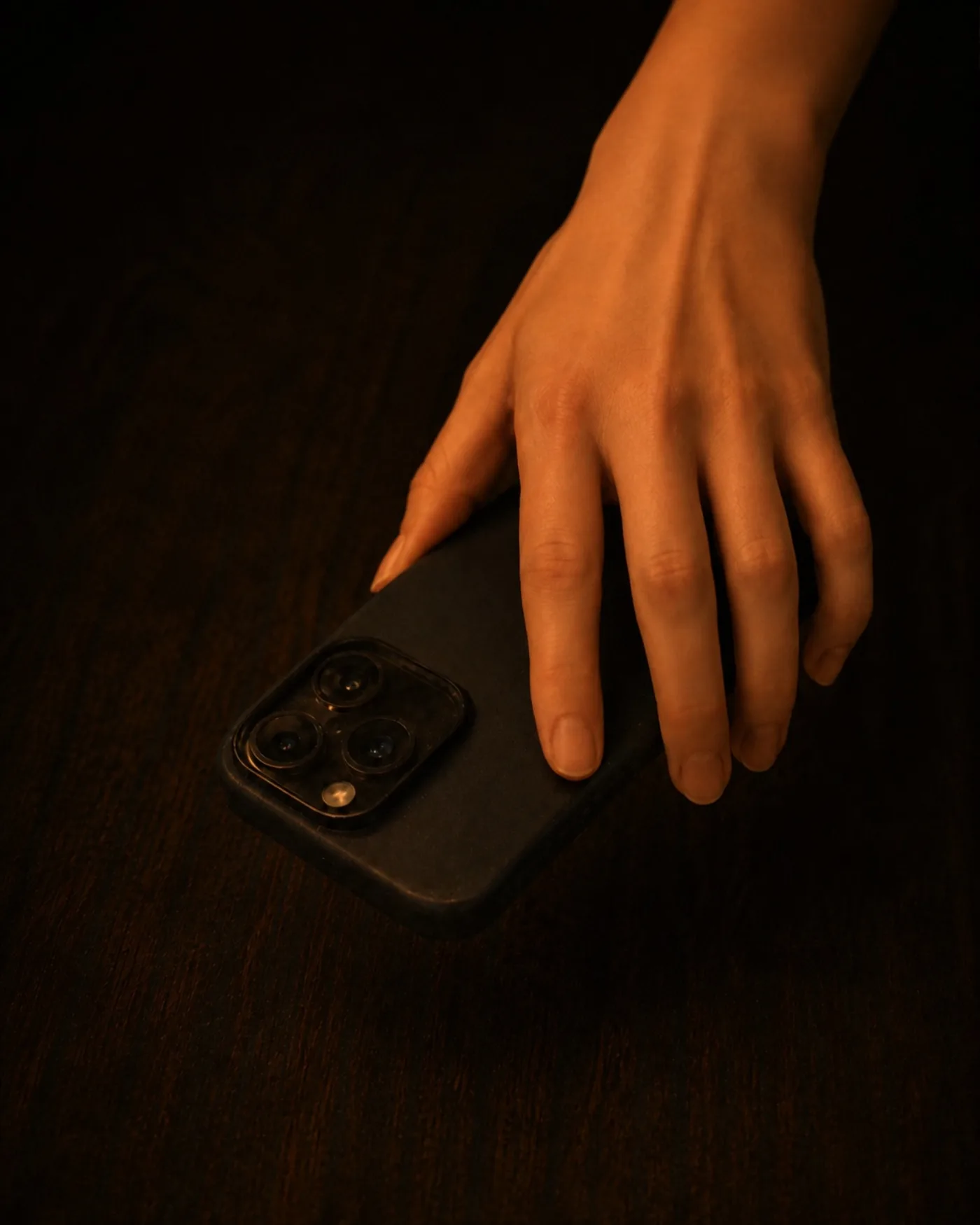
    Turn the phone face-down on a surface and hold it there. After about a second, you'll feel a haptic pulse. The draw is armed.

  3. iii.

    Turn the phone back over. A concept appears — its name, its face (Arriving or Departing), the body of its text, and its position on the axis that contains it.

  4. iv.

    Sit with what you received. No interpretation is offered. The work of the reading is yours to do.

What shapes the draw

Time of day

The algorithm runs on a sine curve peaked at dawn (Arriving) and dusk (Departing). Midday and midnight are the turning points.

Lunar phase

The moon's current phase shifts the weighting — new moon toward threshold and beginning, full moon toward fullness and exposure, waning toward release and departure.

Barometric pressure

Rising pressure draws the draw toward arrival and crystallization. Falling pressure tilts toward dissolution and departure. Pressure is sampled from your device's sensor.

Session memory

Concepts drawn within the past 24 hours are weighted away from, so the same concept does not return too soon. The weighting decays gradually.

The corpus

56 concepts. 8 axes.
112 faces.

The corpus is an original oracle system — not a digitized deck, not a randomized database of archetypes. Each concept belongs to an axis defined by two opposing poles. A seventh concept sits at the middle of each axis, belonging to neither pole. Every concept carries two faces: Arriving, for what is coming into being, and Departing, for what is passing through.

I

Threshold / Continuance

moments of crossing · the long middle

II

Dissolution / Crystallization

coming apart · taking form

III

Witness / Participant

watching life · being inside it

IV

Descent / Emergence

going under · coming through

V

Concealment / Exposure

what is hidden · what is revealed

VI

Contraction / Expansion

drawing inward · opening outward

VII

Severance / Binding

what separates · what connects

VIII

Stillness / Current

the quiet center · the moving force

From the corpus

Each concept holds two faces.
What you receive depends on when.

Endurance

• arriving


This is not strength so much as commitment to continue. The thing being endured has not lessened; only the relationship to it has changed. Endurance is not the absence of difficulty — it is what coexists with it.

Threshold Continuance

The Scar

• departing


The scar is complete and permanent, its story legible in its texture. What required this mark to exist has received it. The scar is not departing — it is simply becoming part of the ordinary surface.

Severance Binding

The Eddy

• arriving


The current that turns back on itself, the circulation within the flow. The eddy is not stagnation — it is the river thinking, water revisiting before continuing. Stillness and current live here simultaneously, neither dominant.

Stillness Current

The Dark Interior

• departing


The innermost darkness has been inhabited long enough. The eyes that adjusted to no light are adjusting to something else. The dark interior releases its occupant toward gradient.

Descent Emergence

Inside the app

Three screens.
Nothing more than is needed.

Vesper Tesserae waiting screen: two concentric rings breathe slowly against a near-black background. A fixed star sits at center. Corner marks brighten as the draw arms.

The waiting screen. Two rings breathe. A star holds still. You turn the phone over when you're ready.

Vesper Tesserae result screen showing a drawn concept: name at top, Arriving or Departing label, body text, and an axis diagram at the bottom with pole names and a positioned marker.

The result. Concept name, face, body text, and its position along the axis — all on one screen.

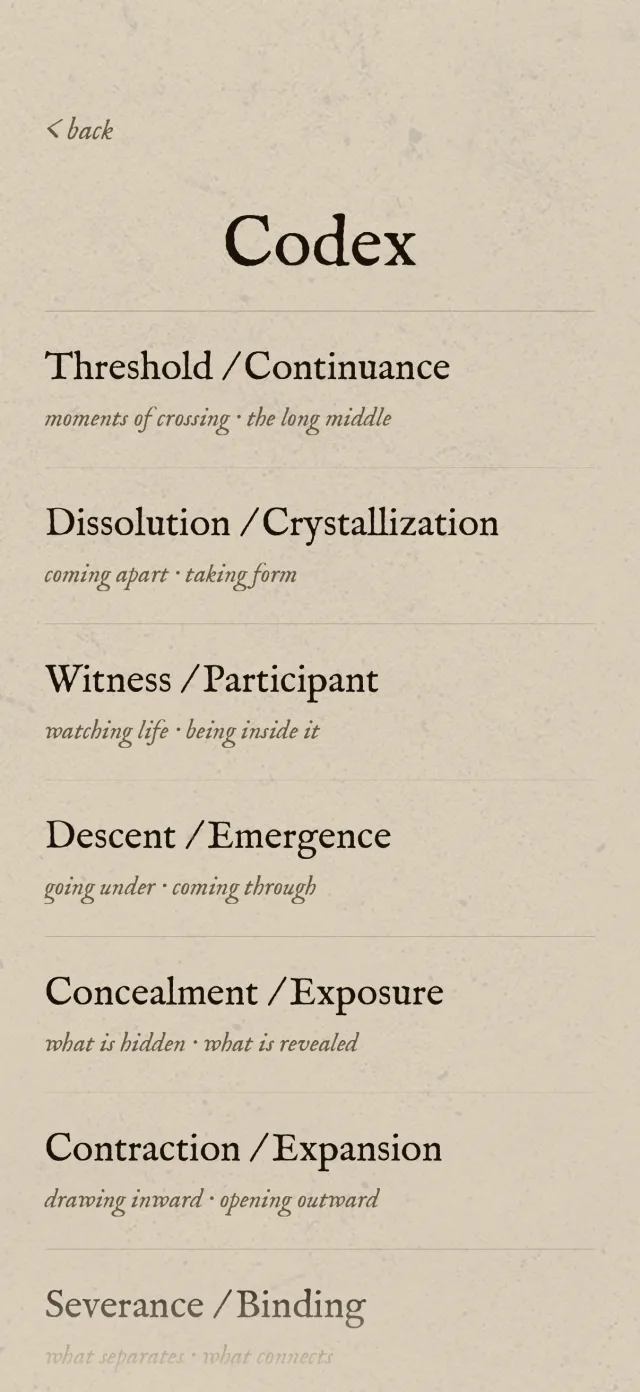
The Codex in Vesper Tesserae: a browsable index of all 56 concepts organized by axis, showing concept names and their pole positions.

The Codex. Browse all 56 concepts by axis — read any card's Arriving and Departing faces outside of a live draw.

How it differs

Not a tarot app. Not a card-of-the-day.
Something closer to the I Ching.

What Vesper Tesserae is not
  • Not a digitized deck. The corpus is original — written for this system, not adapted from an existing tradition.
  • Not AI-powered. There is no language model generating interpretations. The text you receive was written once and does not change.
  • Not a subscription. One purchase. No recurring charges, no paywalled readings, no premium tier.
  • Not gamified. No streaks, no badges, no reminders. No pull-to-refresh. The app does not want your attention — it wants your question.
  • Not ad-supported. Nothing in the experience is competing for your attention on behalf of someone else.
What it has in common with the I Ching
  • A structured system. The 56 concepts are not interchangeable. They are organized into a coherent structure with internal logic.
  • A physical gesture. The draw is not a tap. It requires deliberate action — turning the device — which creates a moment of intention before the result.
  • No interpretation is provided. The concept is presented. What it means in relation to your question is not explained. That work belongs to you.
  • Responsive to conditions. Like the coin toss or yarrow stalk, the draw is shaped by the moment — time, environment, the particular now in which you ask.

Questions

What people ask
before they use it.

What is the difference between Arriving and Departing?

Every concept in the corpus has two faces. Arriving is the face of what is coming into being — the concept as it enters your situation. Departing is the face of what is passing through — the same concept, later in its arc. Which face you receive is determined by the draw algorithm, not chosen by you.

Can I draw more than once?

Yes, but the session memory works against you drawing the same concept again too soon. Concepts drawn in the past 24 hours are weighted away from. The weighting decays gradually, so a concept from this morning is more available this evening than it was an hour ago.

Do I need to be connected to the internet?

No. The corpus and the draw algorithm live entirely on the device. Lunar phase is calculated locally. Barometric pressure is read from the device's onboard sensor. The app works without a network connection.

What is the Codex?

The Codex is a browsable index of all 56 concepts, organized by axis. You can navigate from axis to concept to face without performing a draw. It's useful for sitting with a concept you've already received, or for reading through the system before you consult it.

Does the app track or store my readings?

The app keeps a local record of recent draws — enough to weight the session memory — but it does not log readings to a journal, sync to a server, or share any data. Your draws are private and ephemeral.

Is it a tarot app?

No. Vesper Tesserae does not use a tarot deck and does not follow the structure of tarot. Unlike oracle card apps that digitize existing decks, Vesper Tesserae uses an entirely original system — 56 concepts across 8 thematic axes — written for this app and not mapped onto any existing tradition. If you are looking for a digital tarot deck or oracle card app, this is not that.

When will it be available, and how much will it cost?

Vesper Tesserae is currently in TestFlight and will be available on the App Store soon. Join the waitlist below and you'll be the first to know when it launches and what it costs.

Available soon

Be notified
when it arrives.

Vesper Tesserae is coming to the App Store. Leave your email and we'll send one message when it's there.

One email, when it launches. Nothing else.