The Mechanism
How Vesper Tesserae Works
The gesture, in full
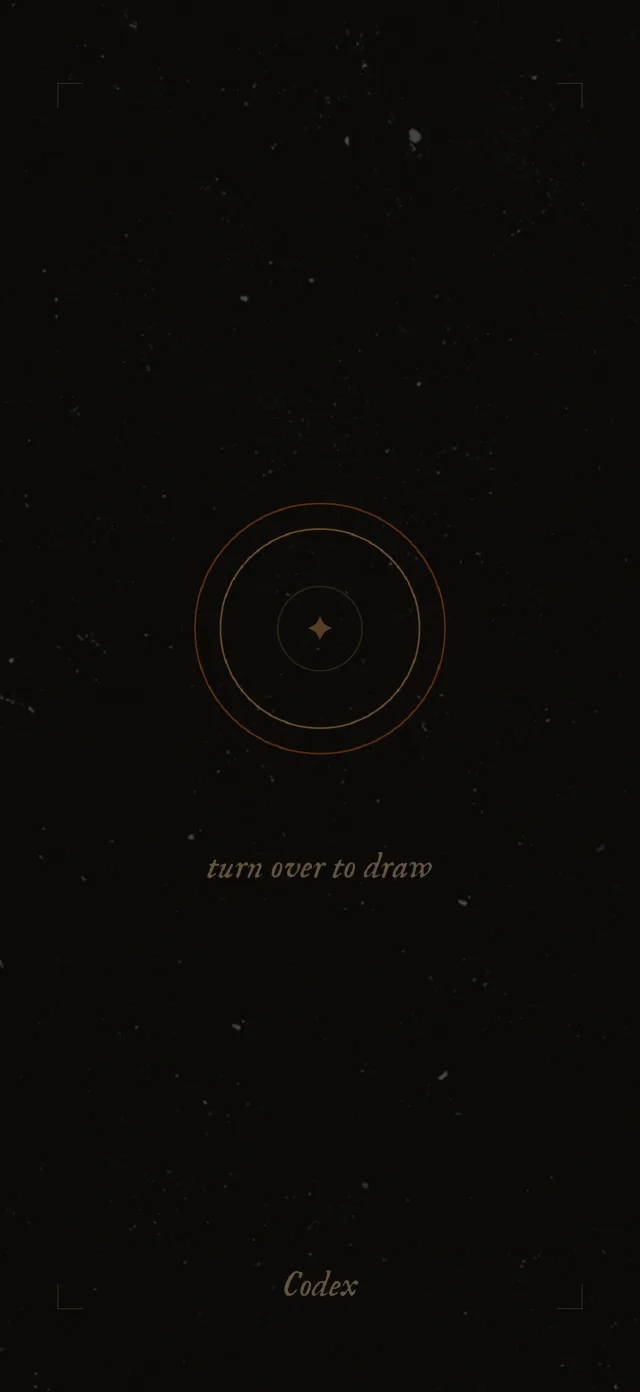
Hold your question in mind. Flip the phone face-down.
Keep it there. In about half a second you'll feel a small tap — that's your cue, the draw is ready. Flip the phone back over, and the concept is waiting on the screen.
From there: tap to return home, or flip face-down again to ask another question. Nothing is saved between draws. There's no record of what you asked or what came up, on this draw or any before it.
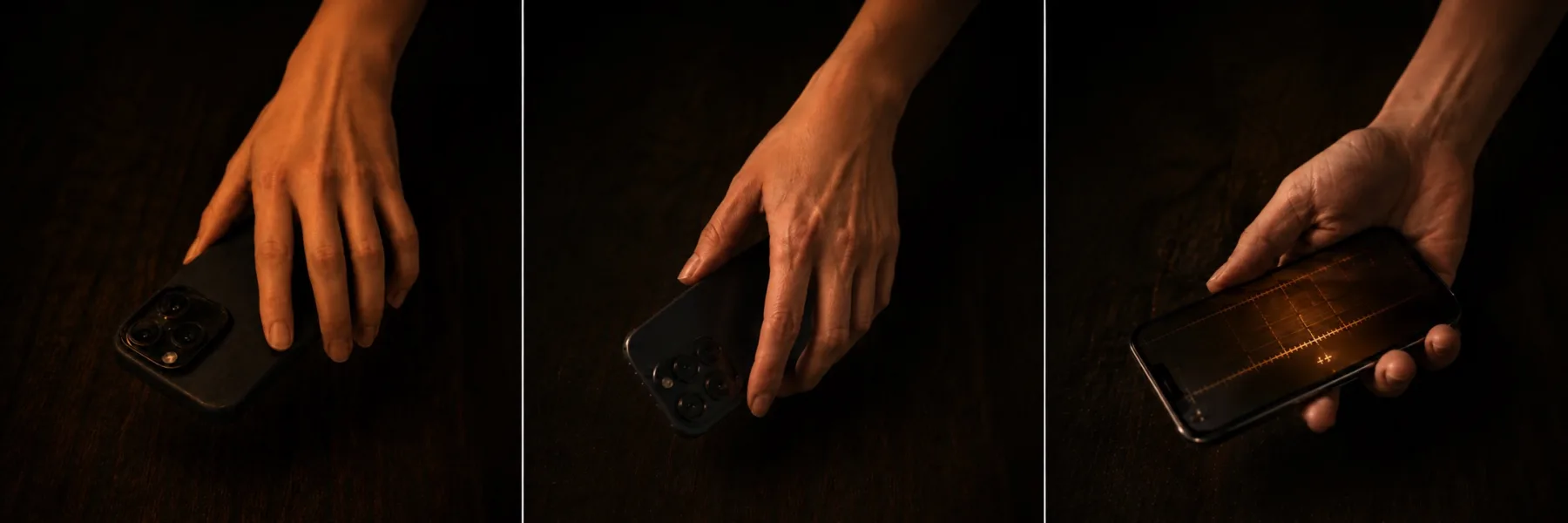
Flip face-down. Hold. Flip back.
What the phone is actually reading
Every draw pulls from whatever your phone can sense in that moment:
- Time of day — where you are in the arc from dawn to dusk and back.
- Lunar phase — where the moon is in its cycle.
- Barometric pressure — the actual air pressure around you, read from your phone's barometer.
- Compass direction — which way you're facing, from the magnetometer.
Not every draw uses all four. Each of the eight axes (see below) leans on a different combination of these — some lean on time and the moon, others on pressure and direction.
The corpus: eight axes, fifty-six concepts
The corpus is organized around eight axes — pairs of opposing states, like Concealment / Exposure or Severance / Binding. Each axis holds seven concepts: three leaning toward one pole, three toward the other, and one sitting at the center between them.
8 axes × 7 concepts = 56 total.
Every concept has two faces — Arriving and Departing — because a concept moving toward you reads differently than one already on its way out. Which face you get depends on the same draw that picked the concept.
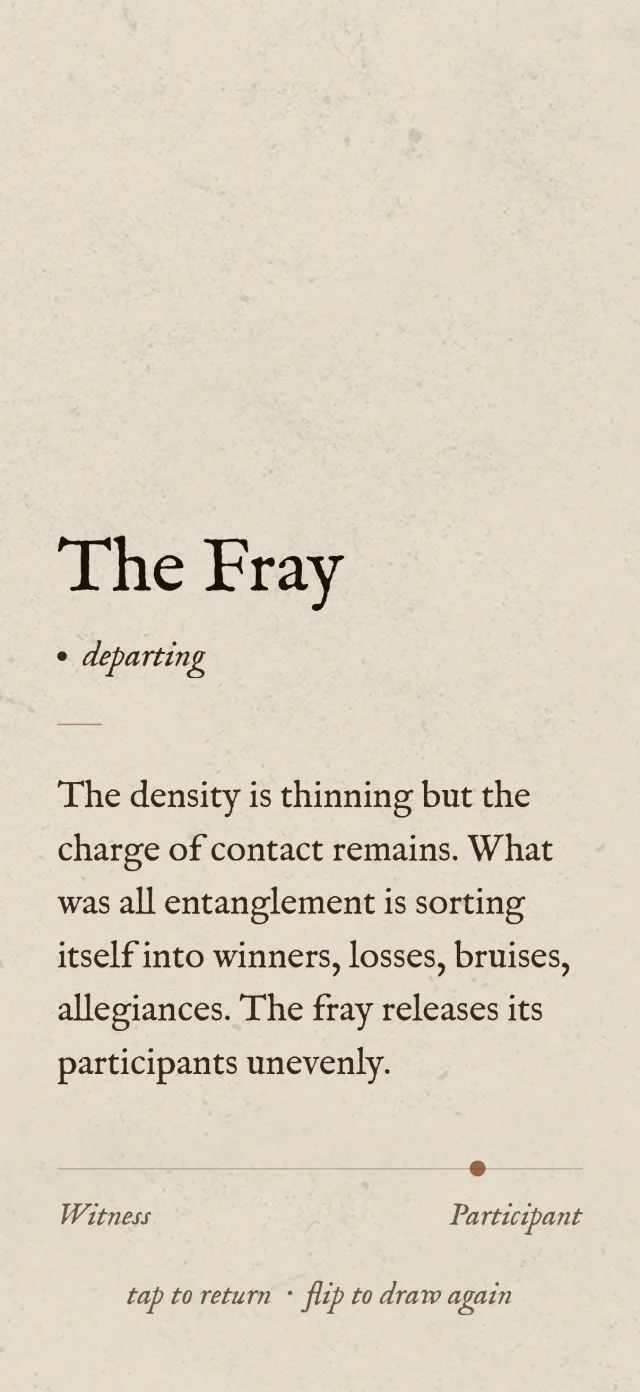
The result screen shows the concept's name, its face (Arriving or Departing), the passage itself, and a small diagram at the bottom: the axis's two poles, with a mark showing where this concept sits between them.
→ See the full taxonomy of axes and concepts on The Codex
The Codex
Every concept in the corpus is browsable at any time, whether or not you're mid-question. Flip through the Codex to see the full range of what the app can draw — axis by axis, concept by concept.